Introduction
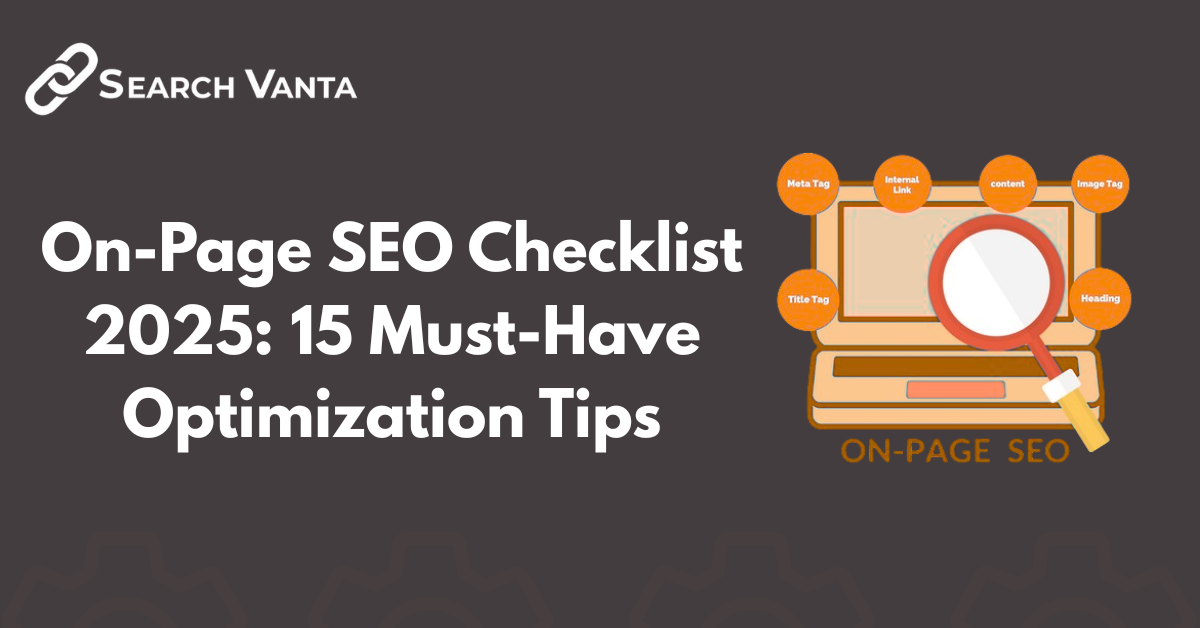
On-page SEO refers to optimizing elements within your website that help it rank better and perform smoothly. It’s not about backlinks it’s about refining the content, structure, and technical setup you control.
Core elements include:
- Keyword-optimized titles and headings
- Relevant, helpful content
- Fast-loading images with alt text
- Mobile-friendly layout
- Logical URL structure
- Strong internal linking
When these areas work together, users enjoy a seamless experience, and Google can easily understand your site’s purpose.
Learn more about what SEO means in digital marketing.
Start With a Proper SEO Audit
An SEO audit shows where your site stands and what’s blocking growth. Think of it as a technical checkup before you start optimizing.
A full audit helps you:
- Detect crawl errors and broken links
- Find duplicate or missing meta tags
- Analyze mobile performance and speed
- Strengthen weak internal links
Example:
A brand discovered hundreds of duplicate meta tags during an audit. After fixing them, their organic clicks rose 40% in three months.
For a detailed approach, explore how to improve your SEO strategies.
Do Keyword Research the Right Way in 2025
Without the right keywords, even the best content struggles to rank.
Why it matters:
- Aligns content with search intent
- Improves conversions with specific long-tail phrases
- Prevents keyword cannibalization
Steps to follow:
- Use tools like Ahrefs, Google Keyword Planner, or AnswerThePublic.
- Study your competitors’ keywords.
- Group terms by intent — informational, navigational, transactional.
- Focus on question-based keywords like “how to optimize SEO in 2025.”
See our full list of best keywords for SEO.
Optimize Title Tags and Meta Descriptions
Your title and meta description are the first impression users see on Google.
Title Tag Tips:
- Keep under 60 characters
- Include your main keyword early
- Add context (like “2025” or “Checklist”)
- Use your brand name only when needed
Meta Description Tips:
- Keep under 160 characters
- Add the keyword once naturally
- Highlight a benefit like “boost rankings”
- End with a soft call to action
Example:
Strong: On-Page SEO Checklist 2025 | 15 Proven Optimization Steps
Meta: Master on-page SEO in 2025 with these proven tips. Boost traffic and stay ahead of updates.
For reference, check Moz’s guide on title tags.
Use Header Tags (H1–H6) Correctly
Headers organize your content and help Google understand structure.
Best practices:
- Use one H1 per page with the main keyword
- Divide sections using H2s
- Add related questions in H3s
- Avoid keyword stuffing
Example:
Instead of “SEO Tools,” use “What Are the Best SEO Tools for On-Page Optimization?” to target voice and long-tail searches.
Create Quality Content That Matches Search Intent
Google rewards content that’s clear, complete, and satisfies user needs.
Focus on:
- Depth and usefulness
- Easy readability
- Factual accuracy with examples
- Strong introductions and conclusions
Example:
A 1,000-word blog with surface-level info won’t beat a 2,000-word guide that solves real user problems.
For better writing structure, see HubSpot’s SEO writing guide.
Strengthen Internal Linking
Internal links help Google find and connect your pages while guiding readers naturally through your content.
How to do it:
- Link to relevant posts using descriptive anchor text
- Avoid “click here” or “read more”
- Update old articles with new internal links
Example:
In a post about keyword research, linking to your SEO audit guide improves both pages’ authority.
You can check our guide on improving SEO strategies for examples.
Optimize Images for Speed and Accessibility
Images enhance engagement but can slow pages down if not optimized.
Tips:
- Compress images using tools like TinyPNG or Squoosh
- Use descriptive filenames with keywords
- Add clear alt text for accessibility
- Implement lazy loading for faster performance
Example:
An eCommerce site reduced page load time by 40% after compressing product images.
For reference, see Google’s image SEO best practices.
Focus on Mobile Optimization and Core Web Vitals
Most users visit from mobile, and Google uses Core Web Vitals to measure performance.
Key actions:
- Use responsive design
- Improve Largest Contentful Paint (LCP) and Cumulative Layout Shift (CLS)
- Make buttons easy to tap
- Check scores on PageSpeed Insights
Example:
A local business improved its Core Web Vitals and saw 30% higher mobile conversions.
For location-based SEO tips, explore our Google Business Profile SEO guide.
Add Structured Data for Rich Snippets
Structured data helps Google better understand your content and display enhanced results.
Tips:
- Use Article, FAQ, or Product schema
- Verify schema with Google’s Rich Results Test
- Keep schema aligned with page content
Example:
A recipe site that added schema markup gained a 40% click increase due to rich snippets.
Analyze Your Backlink Profile
Backlinks from trustworthy websites improve authority and rankings.
How to manage:
- Audit backlinks using Ahrefs or SEMrush
- Disavow spammy links via Google Search Console
- Focus on niche-relevant, high-authority sites
- Keep anchor text natural
Example:
After removing toxic backlinks, a SaaS business gained 35% more organic traffic.
Read Search Engine Journal’s backlink strategy guide.
Perform Competitor Analysis
Studying your competitors helps you find gaps and opportunities.
Steps:
- Identify who ranks for your keywords
- Analyze their content length, speed, and structure
- Spot keywords they missed
- Use tools like Ahrefs or SEMrush for gap analysis
Example:
A blog found 15 unaddressed keywords after analyzing competitors and ranked for 10 within two months.
Improve Local SEO Elements
If you target local customers, optimize for local search signals.
Best practices:
- Keep NAP details consistent
- Optimize your Google Business Profile
- Use local keywords like “SEO agency near me”
- Encourage and reply to reviews
Example:
A restaurant that fixed NAP inconsistencies saw a 40% rise in calls within 60 days.
Track and Report SEO Performance
Tracking SEO progress helps you make informed decisions.
How to do it:
- Use Google Analytics and Search Console
- Set benchmarks for traffic, conversions, and rankings
- Create monthly comparison reports
- Highlight improvements and next steps
Example:
An online store tracked changes after an SEO audit and saw 25% more traffic in three months.
Schedule Regular SEO Audits
SEO isn’t a one-time fix. Regular audits keep your website updated with Google’s standards.
Why it’s essential:
- Identify new technical issues
- Fix content gaps
- Re-optimize old pages
- Stay ahead of algorithm updates
Example:
A startup performed quarterly audits and maintained top-10 rankings for its target keywords all year.
You can read more on Google Search Central’s SEO starter guide.
Conclusion: Future-Proof Your Website with On-Page SEO
On-page SEO builds a foundation for long-term success. When your site is fast, user-friendly, and content-focused, ranking becomes easier.
To summarize:
- Audit your site regularly
- Write for users first, then search engines
- Optimize Core Web Vitals and mobile UX
- Build smart internal links
- Keep learning and updating with every Google change