If you want to find out which SEO software is best for your business, you are in the right place.
Ahrefs and SEMrush are the two most popular SEO tools in the market. Both offer keyword research, backlink analysis, and complete SEO software for professionals.
In this post, you will see a deep comparison between Ahrefs vs SEMrush.
You will learn which tool performs better in:
- Keyword research and keyword database accuracy
- Backlink analysis and link-building insights
- Technical SEO audits and site performance
- Rank tracking and SEO reporting
- Pricing, support, and value
If you want to choose the best SEO software for 2025, read every part carefully. The goal is to help you decide which SEO tool gives you the most accurate data and highest value.
Let’s start the comparison.
Introducing the Two SEO Competitors
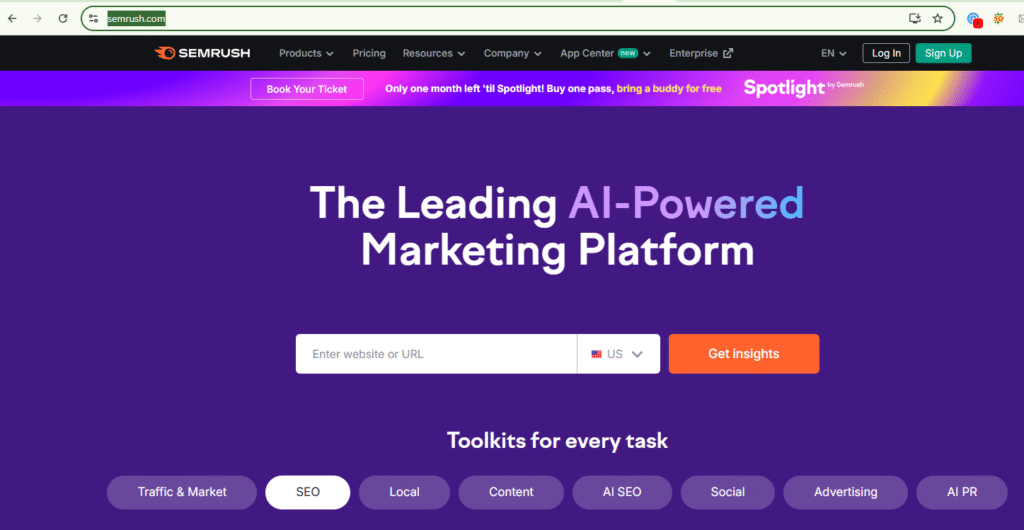
In the blue corner, we have SEMrush. It is one of the most complete digital marketing platforms available.
SEMrush started as a keyword research tool and grew into a full SEO and digital marketing software suite. It helps you discover keywords, analyze competition, track rankings, and manage SEO campaigns.
You can use SEMrush to:
- Find high-performing keywords for organic and paid search
- Track and analyze your competitors’ SEO strategies
- Run a complete site audit to fix technical issues
- Monitor backlinks and referring domains
- Plan content with built-in SEO recommendations
- Manage PPC campaigns and advertising reports
SEMrush is perfect for marketers who need a full view of their online visibility. It combines keyword tracking, technical SEO, and content optimization inside one platform.
In the red corner, we have Ahrefs. It began as a backlink analysis tool but now works as an advanced all-in-one SEO platform.
Ahrefs provides keyword research, site audits, rank tracking, and competitive analysis.

You can use Ahrefs to:
- Analyze backlinks and referring domains in detail
- Discover keyword ideas and search trends
- Monitor ranking positions for target keywords
- Identify content gaps and link-building opportunities
- Audit your website’s SEO health
Ahrefs is known for its massive backlink index and accurate keyword data. Many SEO experts trust Ahrefs for link-building and competitor analysis because of its data precision and fast updates.
Both Ahrefs and SEMrush have become complete SEO tools for professionals, small businesses, and agencies.
Each provides keyword research, site audits, rank tracking, and backlink monitoring.
The challenge is to find out which one gives you better value, better accuracy, and stronger results for your SEO goals.
Let’s find out which tool performs best in real-world SEO work.
Which Tool Delivers Better Keyword Research Results?
The first thing you want to know is which SEO tool helps you find better keyword opportunities.
Keyword research is the core of every SEO strategy. The tool that gives you deeper and more accurate keyword insights can help you plan stronger content and rank higher in search results.
Let’s see how SEMrush and Ahrefs perform in this area.
SEMrush Keyword Research Features
SEMrush gives you a complete view of what your competitors rank for.
You can check every keyword that drives traffic to a website and see how that traffic performs over time.
The Organic Research report lets you explore ranking keywords, positions, traffic value, and top-performing pages.
At first glance, it looks similar to Ahrefs’ organic keywords report, but SEMrush goes further.
It includes more detailed data on search volume trends, keyword difficulty, and user intent.
SEMrush also includes AI-driven keyword features that make data easier to interpret.
The Keyword Overview tool shows:
- Monthly search volume
- Cost per click (CPC)
- Keyword difficulty percentage
- SERP features and trends
- Traffic potential
You also get new proprietary metrics such as Personal Keyword Difficulty (PKD) and Domain Competitive Power.
These numbers help you see how hard it is for your specific domain to rank for a keyword compared to your competitors.
This means SEMrush doesn’t give you only general keyword data. It tailors the results to your website’s authority and topic relevance.
That can help you find realistic, domain-specific keyword opportunities that convert better.
Another advantage is the integration of PPC data.
SEMrush connects SEO and Google Ads metrics, allowing you to see which keywords perform well for both organic and paid campaigns.
If you run an agency or manage SEO and advertising together, this unified data saves time and improves your strategy planning.
Overall, SEMrush gives marketers a complete picture of keyword performance.
You can analyze search intent, traffic potential, and competitiveness with more context than most SEO tools provide.
Ahrefs Keyword Research Features
Ahrefs focuses on simplicity and precision.
Its Keyword Explorer is designed to show you the most actionable data for SEO campaigns.
You type a keyword and instantly see related keyword ideas, search volume, and ranking difficulty.
Ahrefs also goes beyond traditional metrics by showing click data.
This is an important advantage.
Search volume alone doesn’t show how many users actually click results.
Ahrefs tracks how many real clicks you can expect if you rank for a term.
For example, some high-search keywords get low clicks because Google displays instant answers in Featured Snippets.
Ahrefs helps you identify those cases, so you can focus on keywords that bring real traffic.
The Keyword Explorer report includes:
- Search volume
- Click-through rate (CTR)
- Return rate
- Parent topics
- Keyword ideas grouped by phrase match or topic relevance
You can also use Ahrefs’ Organic Keywords report to analyze any website and see which keywords drive its traffic.
This is useful for competitor analysis, helping you find ranking gaps and untapped content opportunities.
Ahrefs doesn’t mix SEO and PPC data like SEMrush, but it provides cleaner, faster reports focused on organic visibility.
For many SEOs, that simplicity is exactly what makes it effective.
Keyword Research Verdict
Both tools are strong in keyword research, but they serve slightly different needs.
SEMrush provides more keyword depth, AI-driven scoring, and PPC integration.
Ahrefs focuses on accuracy, click potential, and clean reporting.
If you need a complete view that combines SEO and advertising data, SEMrush offers more value.
If you prefer quick, reliable SEO keyword analysis with fewer distractions, Ahrefs is a solid choice.
Overall, SEMrush wins this round by a small margin because of its advanced keyword metrics and cross-channel insights.
Which SEO Tool Has the Best Backlink Analysis Feature?
Backlinks play a major role in search engine rankings. To find out which platform performs better, I compared Ahrefs and Semrush backlink tools side by side. Both tools are popular for link data, but they work a little differently.
Semrush Backlink Analysis
Semrush offers detailed backlink reports with data on total links, referring domains, anchor texts, and link toxicity.
In my test, Semrush found around 2.8 million backlinks and 74.9K referring domains. This shows that Semrush has a large and frequently updated index.
You can easily check new or lost backlinks, view link types, analyze toxic links, and compare backlink profiles using the Backlink Gap Tool.
The interface is simple, and the reports include historical link data, which helps track link growth over time.
Semrush is a great choice for SEOs who want to study competitors and find safe, high-quality link opportunities.
Ahrefs Backlink Analysis
Ahrefs is well-known for its backlink checker and user-friendly interface.
In my test, Ahrefs found 852K backlinks and 64.6K referring domains. The link index was smaller than Semrush’s, but the data quality and usability were excellent.
Ahrefs shows the text surrounding each backlink, which helps identify link context and quality. It also lets you track top-linked pages, find broken backlinks, and study anchor text usage.
The Link Intersect feature is very useful for discovering websites that link to your competitors but not to you.
Semrush vs Ahrefs: Backlink Data Comparison
| SEO Tool | Referring Domains | Total Backlinks | Key Features |
| Semrush | 74.9K | 2.8M | Toxic Score, Backlink Gap Tool, Historical Data |
| Ahrefs | 64.6K | 852K | Link Context Preview, Link Intersect, Broken Links |
Backlink Analysis Winner
Semrush provides a larger link database and more filtering options, while Ahrefs offers faster navigation and cleaner link insights.
If you want deep backlink data and competitor tracking, Semrush is slightly better.
If you prefer ease of use and link context details, Ahrefs is the better pick.
Both are excellent backlink analysis tools for SEO and link-building.
Which Tool Has the Best Technical SEO Site Audit Feature?
Technical SEO plays a huge role in improving search performance. You need a tool that identifies site issues fast and helps you fix them efficiently. I tested both Semrush and Ahrefs site audit tools to find out which one offers better results.
Semrush Technical SEO Site Audit
Semrush delivers a detailed technical SEO report that covers every part of your website. You get a clear overall health score showing how optimized your site is.
The audit includes checks for broken links, crawl errors, HTTPS issues, duplicate content, redirect problems, and slow-loading pages. It also highlights warnings, errors, and notices, so you can focus on the most critical issues first.
One standout feature is the Internal Link Distribution report. This shows how link authority flows across your pages and helps you adjust internal links for better SEO performance.
You can also access Core Web Vitals data, structured data checks, and crawlability reports that reveal technical bottlenecks. Semrush organizes everything neatly and gives practical recommendations for improving on-page and technical SEO.
Ahrefs Technical SEO Site Audit
Ahrefs provides a strong site audit tool that analyzes your website for key technical SEO issues. It assigns an SEO health score based on detected problems.
During the test, Ahrefs identified pages with noindex tags, slow load times, missing meta descriptions, and redirect chains. The tool gives a good overview of what needs fixing and what can be improved.
Ahrefs also includes a Structure Explorer feature, which shows how deep your pages are from the homepage. This helps you identify pages that need to be closer to your main structure to improve crawl efficiency.
The reports are easy to read, and the interface is straightforward. However, some minor issues, such as noindex tags, can appear over-prioritized, which may affect the accuracy of the health score.
Semrush vs Ahrefs Technical SEO Comparison
| SEO Tool | Site Health Score | Key Features | Strengths |
| Semrush | Custom | Crawl errors, Internal Link Report, Core Web Vitals | Action-focused recommendations |
| Ahrefs | 81% | Structure Explorer, Redirect tracking, Meta analysis | Clean interface, fast crawl reports |
Technical SEO Site Audit Winner
Semrush takes the lead in technical SEO auditing. It provides more detailed insights, stronger reporting, and actionable suggestions. Ahrefs still performs well, but Semrush gives more clarity and control over your site’s technical performance.
Both tools are valuable, but Semrush is the better choice for a complete technical SEO site audit.
Which Tool Is Best for Rank Tracking?
Tracking keyword positions is a key part of SEO. It helps you measure progress, identify ranking drops, and find new growth opportunities. Both Semrush and Ahrefs offer rank tracking tools, but one performs better overall.
Semrush Rank Tracking
Semrush provides a detailed position tracking feature that monitors keyword rankings daily. You can set target keywords, choose your location, and track changes for desktop and mobile results.
One highlight is the Visibility Score. It shows how visible your site is in search results based on all tracked keywords. This metric gives a quick overview of how your SEO campaigns perform over time.
Semrush updates ranking data almost every day, which keeps reports fresh and reliable. This is ideal for agencies and businesses that rely on frequent performance updates.
The tool also includes SERP features tracking, so you can see when your pages appear in snippets, local packs, or top stories. You can even monitor competitors’ visibility to benchmark your performance.
Ahrefs Rank Tracking
Ahrefs Rank Tracker is accurate and easy to use. You enter your keywords, select the country, and get consistent updates about your search positions.
Ahrefs provides data such as average position, visibility trend, and share of voice. The interface is simple and well-organized. However, Ahrefs typically updates rankings weekly or biweekly, depending on the pricing plan.
This slower update frequency may limit fast-moving SEO campaigns that need daily visibility insights. The tool works best for long-term performance tracking rather than real-time monitoring.
Semrush vs Ahrefs Rank Tracking Comparison
| SEO Tool | Update Frequency | Key Metrics | Ideal For |
| Semrush | Daily | Visibility Score, SERP tracking, Competitor comparison | Agencies and marketers who need daily updates |
| Ahrefs | Weekly or biweekly | Average position, Share of voice, Visibility trend | Users focused on long-term tracking |
Rank Tracking Winner
Semrush wins in rank tracking. The daily updates, advanced visibility metrics, and competitor tracking features make it more powerful for ongoing SEO analysis. Ahrefs remains reliable, but its slower update schedule limits real-time insights.
If you want fast, detailed, and accurate rank tracking data, Semrush is the stronger choice.
Which Tool Has the Best Support?
Good customer support can make a big difference when using SEO software. Fast and helpful replies save time and make the learning curve easier. To compare Ahrefs and Semrush support, I contacted both teams with the same question about keyword data sources.
Ahrefs Support
Ahrefs support is easy to access. You can reach them through the chat icon on the bottom corner of the dashboard. The setup is simple and user-friendly.
After sending my question, I received a reply in less than 15 minutes. The response was clear and explained how Ahrefs collects keyword data using multiple sources, including clickstream data and third-party databases.
Although the chat is not fully live, the response speed and detail were impressive. The support agent answered the question directly and added helpful links for more reading.
Ahrefs also has a comprehensive help center that covers tutorials, troubleshooting, and tool guides. It is easy to search and well-organized, which makes it simple to find answers without contacting support every time.
Semrush Support
Semrush also offers strong customer support. You can use the live chat, email, or phone options, depending on your account level. The chat interface is available inside your dashboard and connects you quickly with a representative.
When I sent the same keyword volume question, Semrush replied within a few minutes. The team provided a detailed explanation about their keyword volume sources, which include Google Keyword Planner, clickstream data, and their internal machine learning system.
The Semrush team also suggested related resources to help understand search volume accuracy and offered to guide me through any report setup if needed.
Semrush vs Ahrefs Support Comparison
| SEO Tool | Support Type | Average Response Time | Extra Resources |
| Semrush | Live chat, Email, Phone | 5–10 minutes | Blog, Help Center, Tutorials |
| Ahrefs | Chat message, Email | 10–15 minutes | Knowledge base, Guides |
Support Winner
Both Semrush and Ahrefs deliver great customer support. The teams are quick, professional, and informative. However, Semrush has a slight edge because of its live chat system and faster response times.
If customer support and fast assistance matter to you, Semrush provides a smoother and more responsive experience.
Which Tool Has Unique Features?
After comparing the main SEO functions, it is time to explore what makes each tool stand out. Both Ahrefs and Semrush offer several unique features that add extra value beyond basic keyword and backlink analysis.
Semrush Unique Features
Semrush includes advanced marketing tools that go far beyond traditional SEO. One standout feature is its complete PPC suite. You can analyze paid search competitors, review ad copies, and study keyword bids directly inside the dashboard. This is extremely helpful for marketers who manage both SEO and Google Ads campaigns.
Semrush also includes a listings management tool that supports local SEO. It helps you manage your business details, such as name, address, and phone number (NAP), across major directories. It also identifies missing or inconsistent listings that could affect local visibility.
Another unique addition is Semrush Copilot, an AI-powered assistant. It reads your analytics data and sends smart recommendations. You get alerts for ranking drops, lost backlinks, and performance changes. Copilot even prioritizes suggestions based on urgency and potential SEO impact, helping you make faster, data-driven decisions.
Semrush also integrates content optimization tools, on-page SEO checkers, and competitive advertising research features. Together, these tools make Semrush a complete SEO and digital marketing platform.
Ahrefs Unique Features
Ahrefs shines with its Content Explorer feature. It helps you find top-performing articles in any niche based on backlinks, traffic, and engagement. You can type a topic, and Ahrefs instantly shows the most successful content for that keyword.
This feature is great for spotting content gaps and planning link-worthy posts. It works similarly to BuzzSumo but includes more SEO data. You can sort by domain rating, referring domains, or social shares to find the best-performing pieces.
Ahrefs also offers a broken link checker that helps identify dead internal and external links. This feature is useful for link building and on-page SEO cleanup. You can find link opportunities and fix SEO errors at the same time.
Other small but useful tools inside Ahrefs include a batch analysis option, outgoing link reports, and traffic estimations for competitors’ top pages. Each one adds value for detailed SEO research.
Semrush vs Ahrefs Unique Features Comparison
| SEO Tool | Unique Feature | Ideal For | Extra Advantage |
| Semrush | PPC Suite, AI Copilot, Local SEO Listings | Marketers, Agencies | SEO + PPC in one platform |
| Ahrefs | Content Explorer, Broken Link Finder | Content creators, Link builders | Strong backlink-based research |
Unique Features Winner
Semrush wins in terms of variety and depth. Its PPC and AI tools give it a broader digital marketing reach. Ahrefs offers strong content research and link analysis tools, but Semrush provides a more complete set of unique features for SEO and marketing combined.
If you want an all-in-one platform that supports both organic and paid campaigns, Semrush is the better choice.
Which Tool Offers the Best Overall Value?
When it comes to SEO tools, pricing and value often determine the final choice. Both Semrush and Ahrefs are premium platforms with advanced features, but how much value do you really get for the money?
Understanding The Pricing Models
Semrush uses a traditional subscription-based pricing system. The basic Pro plan starts at around $139.95 per month and goes up to $499.95 for the Business plan. Each plan includes access to keyword research, backlink analysis, rank tracking, and site audits. The higher tiers add extra features like API access, historical data, and advanced reporting.
Ahrefs, on the other hand, recently moved to a usage-based pricing structure. Instead of fixed feature sets, you now pay based on data consumption. Plans start at about $29 and can reach up to $449 depending on your usage. This change makes it more flexible for light users but confusing for agencies and teams managing multiple clients.
Comparing What You Get For The Price
Semrush offers a wider variety of tools in every plan. You get full PPC data, content optimization tools, social media tracking, and competitive advertising insights along with core SEO features. This means you are getting SEO and PPC software in one subscription.
Ahrefs is more focused on backlink and content analysis. It provides one of the most accurate link databases in the industry. If your work centers around technical SEO, content audits, and link building, Ahrefs gives solid value even at lower tiers.
However, when comparing overall scope and usability, Semrush delivers more value for agencies and marketing professionals. Its clear pricing, combined features, and integrated PPC suite make it a stronger all-in-one choice.
Value Winner
Semrush wins the value comparison because it offers more complete marketing coverage for a single price. Ahrefs remains excellent for backlink and content analysis, but Semrush provides broader functionality, especially for users managing SEO and paid marketing together.
Semrush vs Ahrefs: The Final Verdict
Both Ahrefs and Semrush are top-tier SEO tools with loyal users and impressive track records. Choosing between them depends on your specific needs and workflow.
If your focus is on link building, competitor backlink analysis, and detailed content research, Ahrefs is the right choice. It is simple, fast, and provides deep data for SEO professionals who spend most of their time on link-based strategies.
But if you run an agency or handle multiple digital marketing channels, Semrush is a better long-term investment. It combines keyword research, PPC analytics, social media monitoring, content optimization, and technical SEO audits in a single platform.
Semrush also updates its tools frequently and includes AI-powered recommendations that help you make data-driven decisions faster. Its user interface is more beginner-friendly, and the support team provides helpful training and documentation.
Overall Winner
After comparing key features like keyword research, backlink analysis, technical SEO, unique tools, and overall value, Semrush stands out as the better all-round SEO solution.
Ahrefs remains a powerful option for SEOs who need deep link data and fast research tools, but Semrush’s all-in-one suite makes it more suitable for marketers and agencies looking to grow visibility across multiple channels.